What is a Birth Plan? Complete Guide for Expecting Parents
Learn everything about birth plans, why they matter, and how they help you prepare for your baby's arrival.
Build a personalized birth plan with our free generator, or download a printable birth plan template and fill it in your way. Either way, your care team gets a clear, one-to-two page summary of what matters to you.
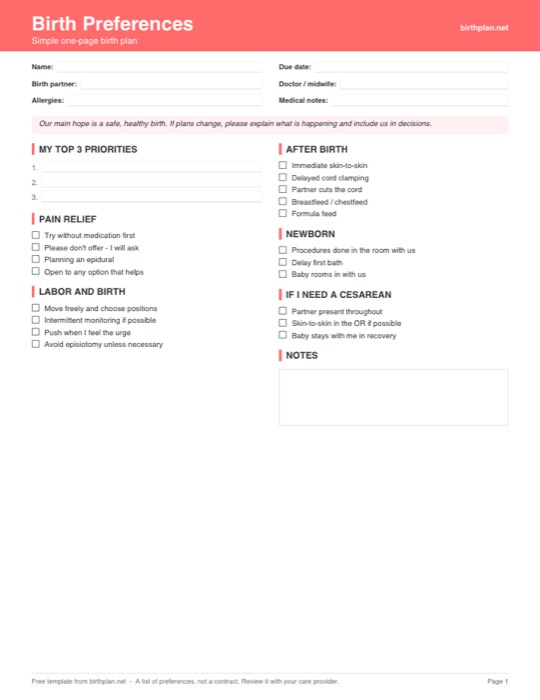
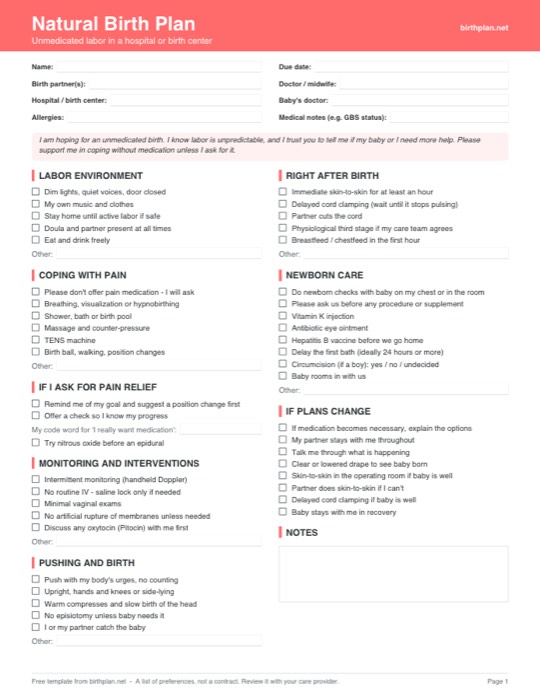
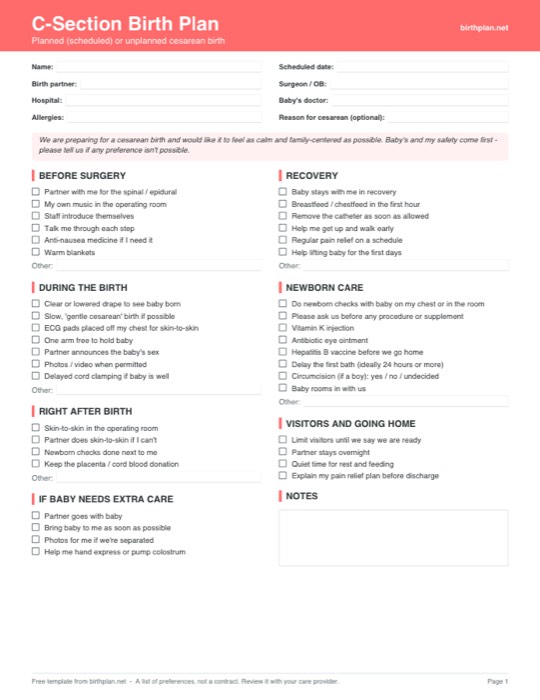
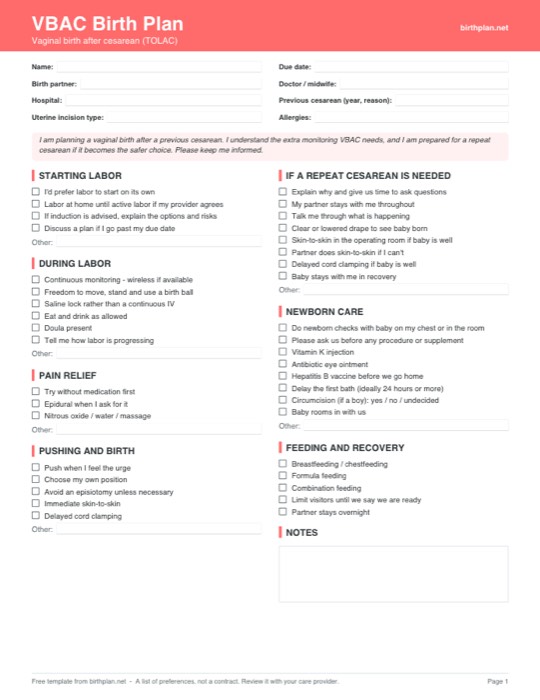
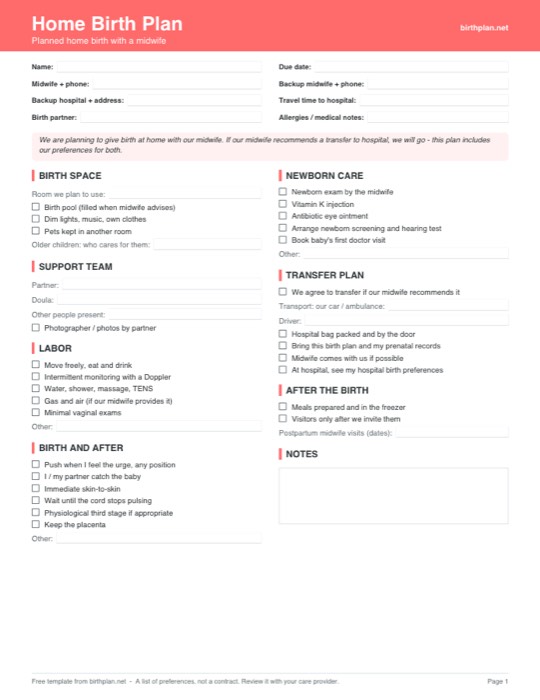
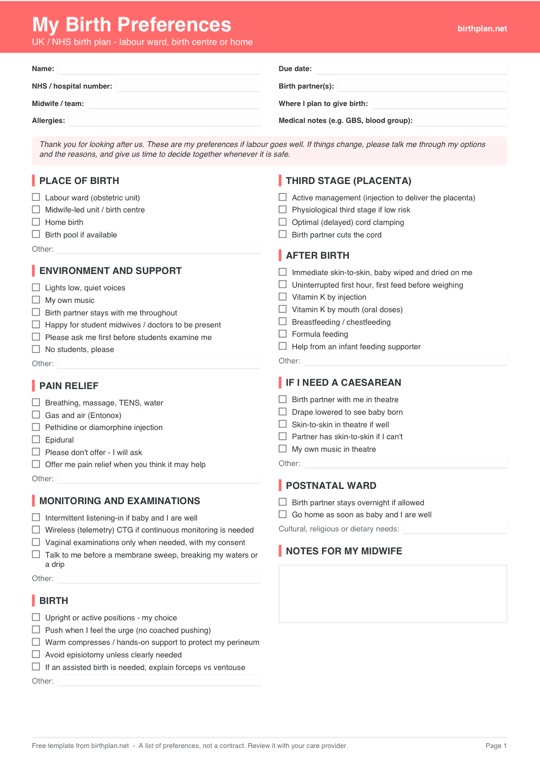
Pick the template that matches your birth. Each one is a fillable PDF you can type into or print and tick by hand, plus an editable Word version. No email or signup. Not sure what to write? See our birth plan examples, or let the generator write it for you.
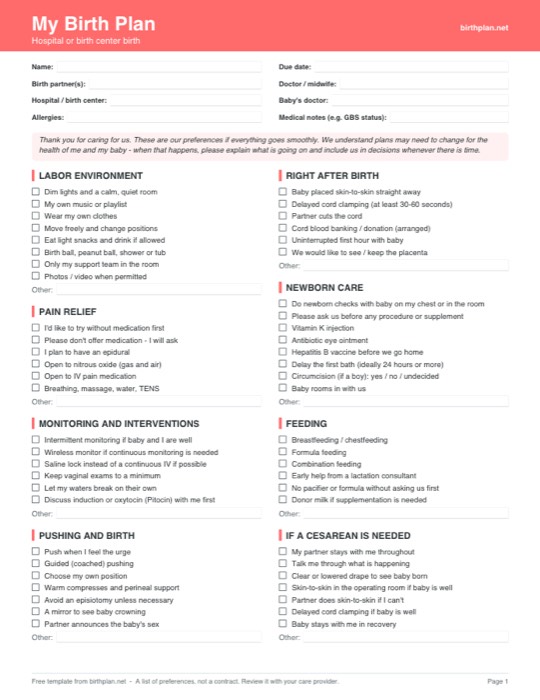
Two pages covering labor, pain relief, birth, newborn care and a cesarean backup.
Also free: a printable hospital bag checklist (PDF). A birth plan is a flexible guide, not a contract. Review yours with your doctor or midwife around 32–36 weeks. Compare all templates in our templates by birth type guide.
Practical resources to help you prepare for labor, delivery, and beyond
Create a personalized birth plan in minutes with our step-by-step interactive tool. Covers all aspects from labor preferences to newborn care.
Create Your PlanInteractive checklist to ensure you pack everything for mom, baby, and partner. Never forget an essential item.
View ChecklistCalculate your due date and track pregnancy milestones. Get personalized week-by-week information.
Calculate DateTrack contractions easily to know when it's time to head to the hospital. Visual patterns and alerts included.
Start TimerEvidence-based information to help you make informed decisions
Learn everything about birth plans, why they matter, and how they help you prepare for your baby's arrival.
Detailed guide on creating a comprehensive birth plan that healthcare providers will respect and follow.
Filled-in sample birth plans for an epidural, unmedicated birth, scheduled C-section, VBAC and a one-page plan.
Comprehensive guide to the three stages of labor, including signs, duration, and what happens at each stage.
Explore all pain relief options from natural methods to medical interventions, with pros and cons of each.
Drug-free techniques including breathing, positions, massage, and hydrotherapy for managing labor pain.
Our guides are based on published guidance from organizations such as ACOG, NICE and the WHO, and are reviewed regularly against current recommendations.
From natural birth to C-sections, we cover all birth scenarios to help you prepare for any situation.
All our interactive tools and resources are completely free to use, with no hidden fees or subscriptions.
We support all family structures and birth choices, providing judgment-free information for everyone.
Access all tools and guides from any device. Perfect for quick reference during appointments or classes.
Resources designed to help partners understand their role and provide better support during birth.
The ideal time to start creating your birth plan is during your second trimester, around 20-24 weeks of pregnancy. This gives you plenty of time to research options, discuss preferences with your partner, and review the plan with your healthcare provider. However, it's never too early to start thinking about your preferences, and you can always update your plan as you learn more throughout your pregnancy.
While not mandatory, a birth plan is highly beneficial. It helps you understand your options, communicate preferences with your healthcare team, and feel more prepared for labor and delivery. Studies show that parents with birth plans often feel more satisfied with their birth experience. Remember, it's a flexible guide, not a rigid contract, and can be adjusted as needed during labor.
A comprehensive birth plan should include your preferences for: labor environment (lighting, music, visitors), pain management options, labor positions, monitoring preferences, delivery preferences (who cuts the cord, immediate skin-to-skin), newborn procedures (vitamin K, eye ointment, circumcision), feeding preferences, and postpartum care. Our birth plan generator covers all these areas and more.
Discuss your birth plan with your OB/GYN or midwife during a prenatal appointment around 32-36 weeks. Bring printed copies to the hospital (one for your chart, one for the nursing staff, and extras for shift changes). Keep it concise - one to two pages is ideal. Be open to discussing any concerns your provider may have about specific preferences.
Absolutely! Your birth plan is a guide, not a contract. You can change your mind about any preference during labor. For example, you might plan for a natural birth but decide you want pain medication, or vice versa. Your healthcare team will support your decisions and help you adjust your plan as needed for your comfort and safety.
Use our free tools and guides to prepare for your baby's arrival with confidence.